AI and IoT Systems Built for Mineral Processing and Refining Floors

Improve safety, operational visibility, and material traceability with AI-powered access control, personnel tracking, asset monitoring, inventory intelligence, and batch genealogy across crushing, flotation, leaching, smelting, and refining operations

AI and IoT Systems Built for Mineral Processing and Refining Floors.

Identification and location software built on AI and IoT technologies helps mineral processing and refining plants answer questions that matter every shift: who is authorized inside a restricted leaching bay, where a mobile crusher unit sits within a stockyard, how much reagent remains before a flotation circuit runs dry, and which batch of concentrate corresponds to which ore lot. MineralProcess AI builds AI and IoT software around these questions, combining RFID, BLE, GPS, and cellular identification technologies with AI software layers for access control, personnel visibility, concentrate tracking, and batch traceability.

Mineral processing and refining operations, from crushing and grinding circuits through flotation, leaching, smelting, and final refining, involve a mix of fixed infrastructure, mobile equipment, hazardous reagents, and rotating personnel and contractor crews. AIoT, the combination of artificial intelligence with IoT devices, connected equipment, and industrial systems, gives these operations a way to identify people, assets, and materials automatically rather than relying on manual logs, paper permits, or disconnected spreadsheets.

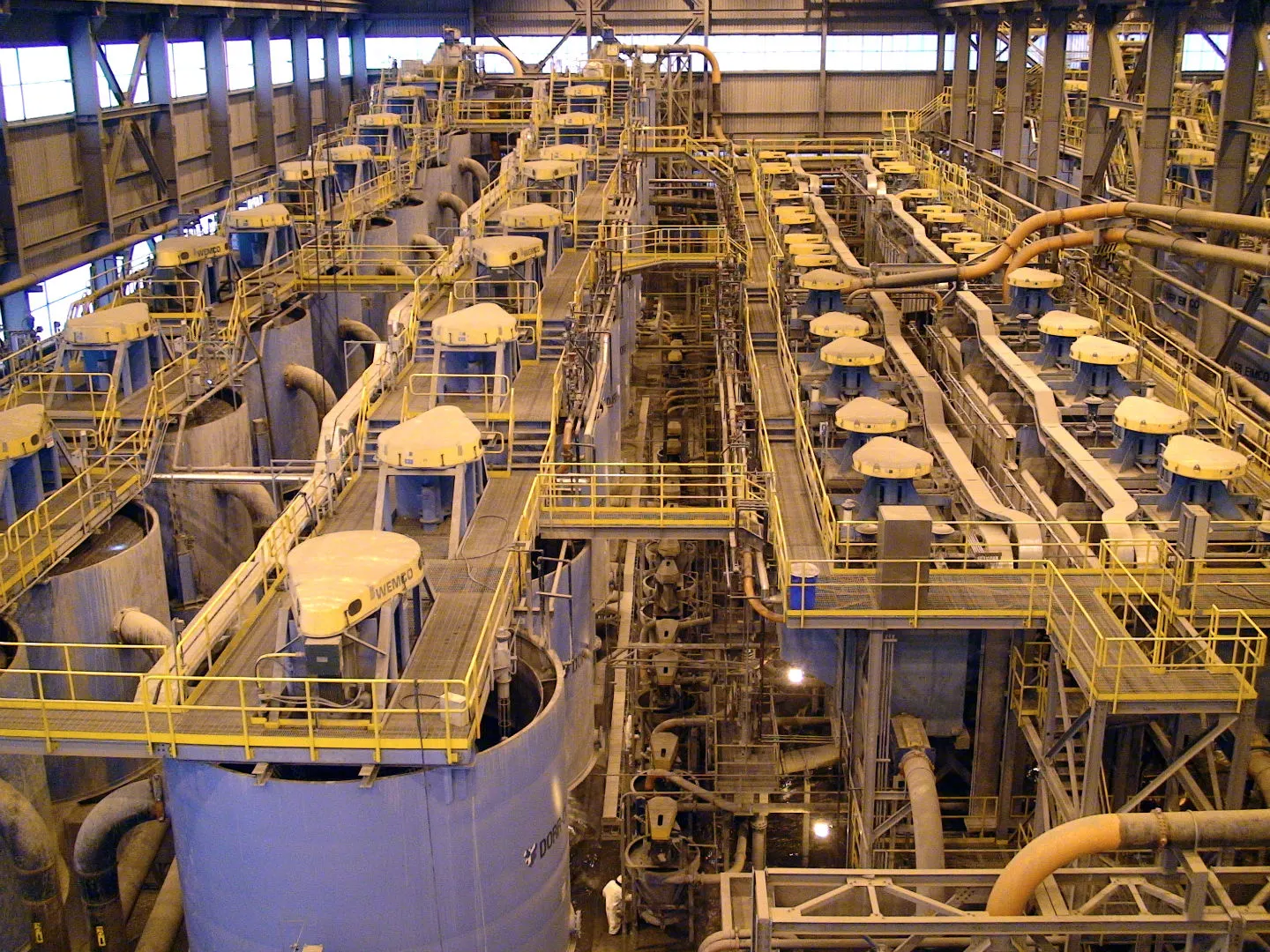
Industrial mineral processing flotation circuit inside a concentration plant

Why Mineral Processing Plants Need AI and IoT Identification Software

Processing and refining facilities operate with continuous material flow, rotating shift crews, contractors moving between leaching tanks and smelter floors, and valuable reagents and concentrates that must be accounted for at every stage. Manual access logs and paper-based tracking cannot keep pace with the movement of personnel across flotation cells, thickeners, autoclaves, and refining lines, and they cannot reliably answer where a specific batch of concentrate originated when a quality issue arises downstream.

AI and IoT identification software addresses this by combining RFID tags, BLE beacons, and GPS devices with AI software that interprets identification data in real time. Instead of a security guard manually checking badges at a leaching bay entrance, an AI and RFID access control system authorizes entry automatically based on role, certification, and zone risk level. Instead of a shift supervisor manually counting reagent drums, an AI-enabled inventory system tracks reagent consumption against flotation circuit throughput.

01
Restricted zone access at leaching, autoclave, and smelter areas requires automated authorization rather than manual gatekeeping
02
Contractor and third-party personnel movement across concentrate handling areas needs continuous visibility, not periodic headcounts
03
Reagent and concentrate inventory levels change constantly and benefit from AI-driven optimization rather than static reorder points
04
Batch genealogy from ore feed through concentrate and final refined product must be traceable for quality and regulatory purposes
Core Intelligence Layers

Core Capability Overview

MineralProcess AI organizes its AI and IoT software around functions that mineral processing and refining plants use daily. These functions are grouped by operational priority, with access control and personnel tracking forming the most immediate safety and security layer, followed by asset and inventory tracking, and supported by traceability and in-process material tracking where relevant to plant workflows.

01
Workforce + Safety

Access Control and Personnel Location

Restricted zone access intelligence and refinery access authorization AI govern who may enter flotation circuits, autoclave rooms, smelter floors, and refining bays. AI software cross-references RFID or BLE credentials against certification records, shift schedules, and zone-specific hazard classifications before granting entry. Personnel location intelligence extends this by tracking where operators and maintenance crews are positioned relative to hazardous process equipment such as leach tanks, converters, and electrolytic cells, while contractor movement analytics gives plant safety teams visibility into third-party crews working within concentrate handling and reagent storage zones.

02
Equipment + Materials

Asset and Inventory Tracking

Asset location intelligence identifies mobile equipment, sample containers, and portable instrumentation as they move between crushing, grinding, flotation, and leaching areas. Reagent inventory optimization applies AI software to consumption patterns from flotation reagents, leaching agents, and smelting fluxes, helping plant operators avoid both stockouts and overstocking of controlled chemicals. Concentrate stockpile intelligence tracks tonnage and location of concentrate piles within stockyards and load-out areas, while spare parts inventory analytics supports maintenance teams responsible for keeping crushers, mills, and thickeners running.

03
Material Intelligence

Traceability and In-Process Material Tracking

Ore-to-concentrate traceability AI and batch genealogy intelligence connect incoming ore lots to their corresponding concentrate and refined outputs, supporting quality investigations and regulatory documentation. In-process material analytics gives visibility into work-in-progress material as it moves through flotation cells, thickeners, and leaching circuits, which is particularly relevant in refining operations where batch identity must be preserved from feed to finished product.

Plant Intelligence Map

AIoT Function Groups and Plant Area Applications

This table provides a quick-reference overview of three core AIoT function groups—Access & Personnel, Asset & Inventory, and Traceability & WIP. It maps key AI software capabilities to the plant areas where they are most commonly deployed, including leaching bays, smelter floors, stockyards, and refinery lines. The key takeaway is that AIoT technologies enable comprehensive visibility, operational control, workforce safety, and material traceability throughout the entire plant environment.

Function Group
AI Software Capabilities
Plant Areas
01
Safety + Workforce

Access & Personnel

  • Restricted zone access intelligence
  • Refinery access authorization AI
  • Personnel location intelligence
  • Contractor movement analytics
Flotation circuits Autoclave rooms Smelter floors Refining bays Concentrate handling areas Reagent storage zones
02
Equipment + Materials

Asset & Inventory

  • Asset location intelligence
  • Reagent inventory optimization
  • Concentrate stockpile intelligence
  • Spare parts inventory analytics
Crushing areas Grinding circuits Flotation areas Leaching areas Stockyards Load-out areas
03
Material Intelligence

Traceability & WIP

  • Ore-to-concentrate traceability AI
  • Batch genealogy intelligence
  • In-process material analytics
Flotation cells Thickeners Leaching circuits Refining operations

Comprehensive visibility across people, equipment, inventory, and material movement throughout mineral processing and refining operations.

Identification Technologies

AI and RFID and AI and BLE Technology Highlights

RFID BLE GPS AI
01 RFID
Fixed Identification

RFID Access and Authorization

RFID and BLE form the identification backbone for most access control and location tracking deployments in mineral processing plants. RFID tags and readers are typically deployed at fixed access points such as leaching bay entrances, smelter floor doorways, and reagent storage rooms, where AI software interprets tag reads against authorization rules to control entry. AI and RFID access control combines this identification layer with rule-based and pattern-based AI to detect anomalies such as credential sharing or after-hours entry attempts near autoclave and converter areas.

02 BLE
Real-Time Location

BLE Personnel and Asset Tracking

BLE beacons and tags support more granular personnel and asset tracking within open plant areas such as flotation banks and concentrate handling zones, where fixed RFID checkpoints are less practical. AI and BLE personnel tracking allows safety teams to see real-time positioning of operators relative to hazardous zones, while AI and BLE zone monitoring flags when personnel enter or exceed time limits within reagent storage or high-temperature smelting areas.

03 GPS
Wide-Area Visibility

GPS and Cellular Asset Visibility

GPS and cellular technologies extend identification and tracking to mobile equipment and vehicles operating across stockyards, load-out areas, and connecting roadways between processing and refining sections of a site. AI and GPS fleet tracking supports visibility of front-end loaders and haul trucks moving concentrate between stockpiles and rail or port load-out points, while AI and cellular asset visibility maintains tracking continuity for equipment moving beyond the range of fixed RFID or BLE infrastructure.

Technology Fit
RFID

RFID suits fixed access points including leaching bays, autoclave rooms, and refining lines

BLE

BLE suits open-area personnel and asset tracking across flotation and concentrate handling zones

GPS

GPS and cellular suit mobile equipment and vehicles moving across stockyards and load-out areas

AI

AI software layers interpret identification data from all three technologies to support access decisions, location awareness, and inventory accuracy

Technology Comparison

Identification Technologies Comparison for Mineral Processing Operations

This comparison table evaluates RFID, BLE, GPS, and Cellular technologies across three key criteria: typical communication range, best-fit mineral processing applications, and example plant deployment zones. It helps technical buyers quickly determine which identification and tracking technology is most appropriate for specific operational requirements, from indoor asset tracking and personnel monitoring to outdoor fleet management and remote-site connectivity. The key takeaway is that each technology serves a distinct role, and the most effective AIoT deployments often combine multiple technologies to achieve complete operational visibility across the plant.

01 Fixed Identification

RFID

Deployment Pattern

Fixed access-point identification

Best Fit

Access control, credential verification, and automated authorization at controlled entry points

Plant Areas
Leaching Bays Autoclave Rooms Refining Lines Reagent Storage
02 Area Visibility

BLE

Deployment Pattern

Open-area personnel and asset identification

Best Fit

Personnel location, asset visibility, and hazardous-zone monitoring across active plant areas

Plant Areas
Flotation Banks Concentrate Handling Reagent Storage Smelting Areas
03 Outdoor Tracking

GPS

Deployment Pattern

Wide-area equipment and vehicle tracking

Best Fit

Fleet tracking and visibility of mobile equipment transporting concentrate across the site

Plant Areas
Stockyards Load-Out Areas Plant Roadways Transfer Points
04 Extended Visibility

Cellular

Deployment Pattern

Tracking beyond fixed RFID or BLE infrastructure

Best Fit

Maintaining tracking continuity for equipment moving across wider processing and refining environments

Plant Areas
Remote Plant Areas Connecting Roadways Stockyards Load-Out Operations
AIoT
Combined Technology Strategy

The most effective AIoT deployments often combine multiple technologies to achieve complete operational visibility across the plant.

Deployment Architecture

Cloud and Server Deployment Options

Mineral processing and refining operators vary widely in how they prefer to host AI and IoT identification software, and MineralProcess AI supports both cloud and server deployment models to match plant IT policies and connectivity conditions.

01
Hosted Infrastructure
Deployment Model

Cloud Version

The cloud version operates as a fully hosted software-as-a-service deployment, managed within cloud infrastructure rather than on plant-owned servers. This model suits multi-site operators who want centralized visibility across several processing and refining facilities without maintaining local server infrastructure at each site.

CENTRALIZED MULTI-SITE HOSTED
02
Private Infrastructure
Deployment Model

Server Version

The server version deploys software on customer-managed servers, private data centers, or on-site plant servers. This model is not limited to fully on-premises installations but includes any privately hosted enterprise server deployment, which is often preferred by refining operations with strict data residency requirements or limited external network connectivity near remote processing sites.

PRIVATE CONTROLLED FLEXIBLE
Enterprise Connectivity
ERP MES SCADA

Both deployment models connect to plant enterprise systems including ERP, MES, and SCADA through middleware and edge data synchronization layers, which are covered in further detail within the Integration section of this website.

Plant Applications

Industry Applications Snapshot

AI and IoT identification and location software supports a range of real-world scenarios across mineral processing and refining sites, including refinery access control at restricted entry points, concentrate stockpile visibility across stockyards, smelter floor personnel and asset tracking near converters and casting lines, reagent storage and handling oversight within controlled chemical rooms, and tailings facility access monitoring for environmental and safety compliance. Each of these scenarios is explored in greater depth within the Applications section of this website.

01 ACCESS
Restricted Areas

Refinery Access Control

Restricted entry points

Refining
02 STOCKPILE
Material Visibility

Concentrate Stockpile Visibility

Stockyards

Material
03 TRACKING
Personnel + Assets

Smelter Floor Personnel and Asset Tracking

Near converters and casting lines

Smelting
04 REAGENTS
Chemical Oversight

Reagent Storage and Handling Oversight

Controlled chemical rooms

Safety
05 TAILINGS
Environmental + Safety

Tailings Facility Access Monitoring

Environmental and safety compliance

Compliance
Application Coverage

Access control, material visibility, personnel tracking, chemical oversight, and environmental monitoring across mineral processing and refining environments.

Industrial IoT Experience

Built on Two Decades of IoT Experience

MineralProcess AI is created within Aperture Venture Studio, with support from GAO. Serving for two decades in IoT, the team behind MineralProcess AI has supported thousands of IoT customers and completed thousands of IoT deployments across mineral processing and related industrial operations. The software is based on real deployment experience and actual customer environments drawn from GAO, backed by sustained investment in research and development and supported by structured quality assurance processes.

Technical support is available both remotely and on-site, led by Ph.D. professionals from top universities who guide the ongoing development of MineralProcess AI. This foundation has attracted additional investment, technical experts, and strategic partners over time. The team has supported Fortune 500 companies, leading research and development firms, prestigious universities, and government agencies across the United States and Canada, giving MineralProcess AI a track record of reliability across demanding industrial environments.

01
Experience

Two decades of IoT deployment experience across industrial operations

02
Deployments

Thousands of completed IoT projects supporting real plant environments

03
Engineering

Research and development backed by structured quality assurance

04
Support

Remote and on-site technical support from Ph.D.-level experts

05
Track Record

Track record with Fortune 500 companies, research institutions, universities, and government agencies

Getting Started

Getting Started with AI and IoT Identification Software

Mineral processing and refining plants considering AI and IoT identification software typically begin by identifying their highest-priority access control and personnel tracking needs, since these functions carry the most immediate safety and operational impact. From there, asset and inventory tracking capabilities extend visibility into reagent consumption, concentrate stockpiles, and spare parts, while traceability functions support quality and regulatory requirements where batch identity must be preserved from ore feed through refined output.

Technical teams can explore the AI Functions, IoT Software, and Hardware Technologies sections of this website to understand how MineralProcess AI structures its software across intelligence, device management, and physical identification layers, or review the Integration section to understand cloud and server deployment options alongside ERP, MES, and SCADA connectivity.